

Planetary Exploration and Astrobiology
Small satellite technology is now also being used for space exploration of the solar system. Among the new applications, the detection of surface materials on rocky bodies using high-energy spectroscopy is of great interest for future missions.
The TASTE - Terrain Analyzer and Sample Tester Explorer mission, developed by the ASi - Italian Space Agency, aims to identify the surface composition of Deimos, a satellite of Mars, in order to determine its origin (whether it is the result of an impact between Mars and another body, or a dynamic capture from the asteroid belt). This will be possible during the orbiting phase, through the detection of high-energy lines produced by X-ray fluorescence of the soil, following interaction with solar flares, or produced by spontaneous gamma decay of surface elements.
Within the PRORIS programme of INAF - National Institute for Astrophysics, PROGReX is part of a set of instruments that will be tested on the Moon. Similar to TASTE, the experiment will involve the characterisation of lunar materials of various interest, in this case equipping the instrumentation with a source for the generation of high-energy photons.
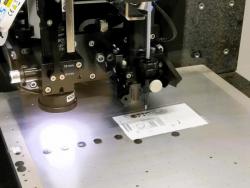
In both these missions, the X-ray and gamma-ray spectrometer already in use in the HERMES mission (whose targets are astrophysical sources) is used as a detection instrument, adapting it for planetary observation. This involves a series of activities on several fronts: redefinition of the electronics and mechanical design; simulations using Geant4; characterisation of measurements through tests in the new high-energy laboratory at the OATs - Trieste Astronomical Observatory; development of remote sensing data analysis for the identification of soils for observation.
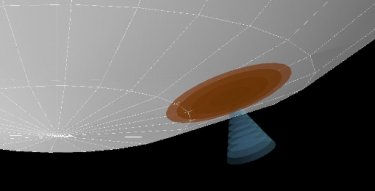
Also in collaboration with INAF-OATs, studies in the field of astrobiology are being carried out with the POTs group - Planetary systems and Origin of life at INAF Trieste. In this context, climate models of exoplanets are being developed, with applications to primordial Earth and Mars; this is now being integrated with the use of Geant4 simulations to investigate the interaction between space radiation and the planetary environment, including any organic components: among the case studies are the plumes of the icy moons Enceladus and Europa.
Research Group
| Space missions and astrobiology |